Influence of the coiling porosity on the risk reduction of the cerebral aneurysm rupture: computational study

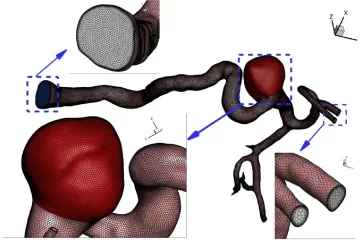
Aneurysm Coiling Treatment We are pleased to inform you that our article “Influence of the coiling porosity on the risk reduction of the cerebral aneurysm rupture: computational study” has been published in Nature Scientific Reports and is available online.The open-access paper has just been published today and you can read more details about coiling treatment modeling here: Link to the paper Abstract: The formation and progress of cerebral aneurysm is highly associated with hemodynamic factors Read more…

Blade Fatigue Assessment at Bewind Is a Breeze

By Daniel Kowollik, Lead Engineer, Blade, Bewind, and Fabio Pavia, Senior Product Manager, Ansys Wind energy is one of the world’s most promising sources of renewable energy. Interest in this emission-free natural resource has grown even more as concerns over air quality and climate change continue to rise globally.  As demand for wind energy increases, the need to advance technology to produce larger, quieter, and less expensive wind turbines also intensifies. As engineers work to Read more…

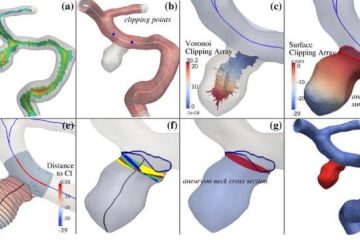
Aneurysm Clipping Treatment

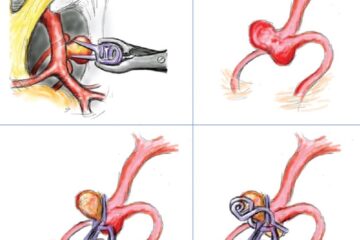
Aneurysm Clipping Clipping is a tried-and-true method of treating an aneurysm, a bulge in a weak area of an artery. Artery walls are under constant pressure from the high-pressure blood flow inside them. The constant pressure can cause a weak area of the wall to balloon out, forming an aneurysm. The main risk of an aneurysm is that the ballooning area may eventually burst, spilling blood into the brain. This causes a hemorrhagic stroke, a Read more…

Building a Bioartificial Kidney

“By simulating the flow of blood through the different designs in Fluent and visualizing the outcomes in CFX, the researchers at The Kidney Project could measure blood flow velocity precisely, identify areas where clots were likely to form and understand why those spots created opportunities for clotting and then incorporate and test design adjustments.” Most people don’t appreciate their kidneys — until they fail. These small organs are responsible for filtering toxins from the blood Read more…

Take Heart: Personal Digital Avatar Dramatically Improves Aortic Surgery Outcomes

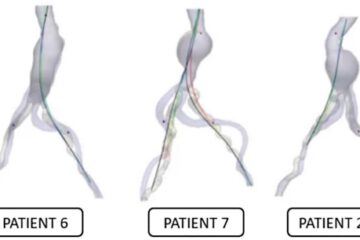
ANSYS ADVANTAGE MAGAZINE By Ansys Advantage Staff Each year, thousands of people die as a result of aortic aneurysms — balloon-like bulges caused by weaknesses in the aortas, the large artery that sends blood from the heart through the vascular system. If an aneurysm remains undetected, the aorta can eventually tear or rupture, causing uncontrolled internal bleeding. When an aneurysm is detected before it ruptures, thoracic surgeons can intervene by repairing the aorta and eliminating the Read more…

Endovascular Treatment for Cerebral Aneurysms

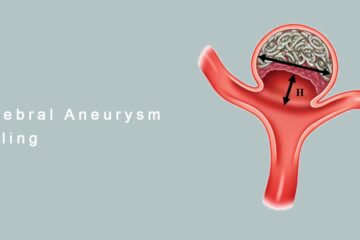
Endovascular Coiling Endovascular coiling is a procedure performed to block blood flow into an aneurysm (a weakened area in the wall of an artery). Endovascular coiling is a more recent treatment for brain aneurysms; it has been used in patients since 1991. Endovascular coiling is a minimally invasive technique, which means an incision in the skull is not required to treat the brain aneurysm. Rather, a catheter is used to reach the aneurysm in the Read more…

Best Practice: RANS Turbulence Modeling in Ansys CFD

Reynolds-averaged Navier–Stokes (RANS) equations Turbulence modeling is one of the main sources of uncertainty in CFD simulations of technical flows. This is not surprising, as turbulence is the most complex phenomenon in classical physics. Turbulent flows pose a multi-scale problem, where the dimension of the technical device is often of the order of meters (or even 102 meters in case of airplanes and ships), whereas the smallest turbulence vortices are of the order of 10-5 Read more…

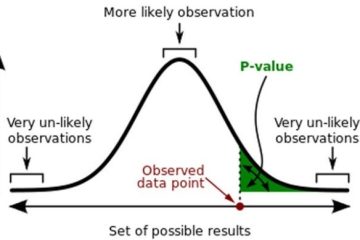
What Can You Say When Your P-Value is Greater Than 0.05?

P-value P-values are frequently misinterpreted, which causes many problems. But the fact remains that the p-value will continue to be one of the most frequently used tools for deciding if a result is statistically significant.  You know the old saw about “Lies, damned lies, and statistics,” right?  It rings true because statistics really is as much about interpretation and presentation as it is mathematics. That means we human beings who are analyzing data, with all our foibles and Read more…

User-defined function (UDF)

UDF A user-defined function, or UDF, is a C or C++ function that can be dynamically loaded with the ANSYS Fluent solver to enhance its standard features. For example, you can use a UDF to: Customize boundary conditions, material property definitions, surface and volume reaction rates, source terms in ANSYS Fluent transport equations, source terms in user-defined scalar (UDS) transport equations, diffusivity functions, and so on. Adjust computed values on a once-per-iteration basis. Initialize of Read more…

Description of geometric indices in cerebral aneurysms

Description of geometric indices Parent vessel geometric characterization Given the 3D surface model, vessel centerlines are computed for all the available segments and are available for download on the website. Only the tract hosting the aneurysm is used for the geometric characterization. The segment under investigation is extracted from the complete centerline network by identifying the bifurcations and separating the branches. The main bifurcation on the analyzed segment is used for the computation of angles. Read more…